MYWJDF
Professional Pickleball Supplier
pickleballpaddlespro@gmail.com
How To Play Pickleball – Basic Rules for Beginners
Basic rules for beginners, in plain English — the same short guide our wholesale partners use when they introduce pickleball to their own customers.
Pickleball is one of the fastest-growing sports in the world, and it is easy to see why: the court is small, the paddle is light, and a complete beginner can hold a rally within their first hour. That low entry barrier is exactly what makes it such a strong retail category for clubs, schools, community centers and sporting-goods dealers.
On this page we summarize the five basic rules every new player needs before their first game. We keep it short and practical — no jargon, no referee-level detail, just what a first-time player (or your customer) actually needs to know to step onto a court and play.
If you are building a pickleball program — retail shelves, club equipment, school kits or branded merchandise — MYWJDF can supply the complete setup: paddles, balls, nets, apparel and accessories, with OEM and private-label branding available on request.
What a pickleball court looks like
A live rally at the kitchen line — the same court, net and non-volley zone described in the rules below.
Footage shown for illustration purposes.
Five rules, and you can play your first game
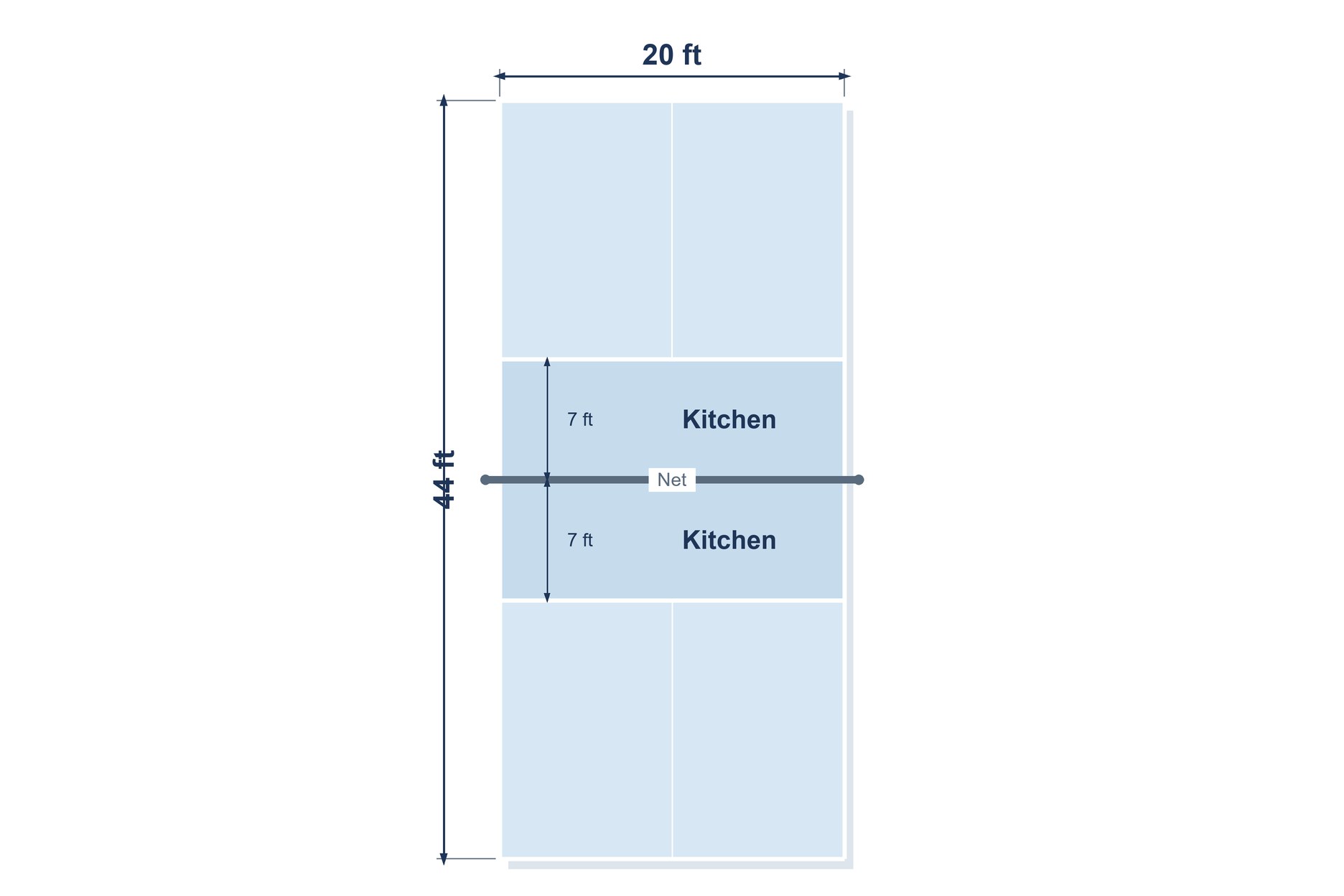
The Court and the Kitchen
A pickleball court measures 20 x 44 ft — the same footprint for singles and doubles. The net stands 36 in at the sidelines and 34 in at the center. Closest to the net on both sides lies a 7-ft strip called the non-volley zone, better known as the kitchen. Knowing where the kitchen line is matters: most of the game's strategy happens around it.
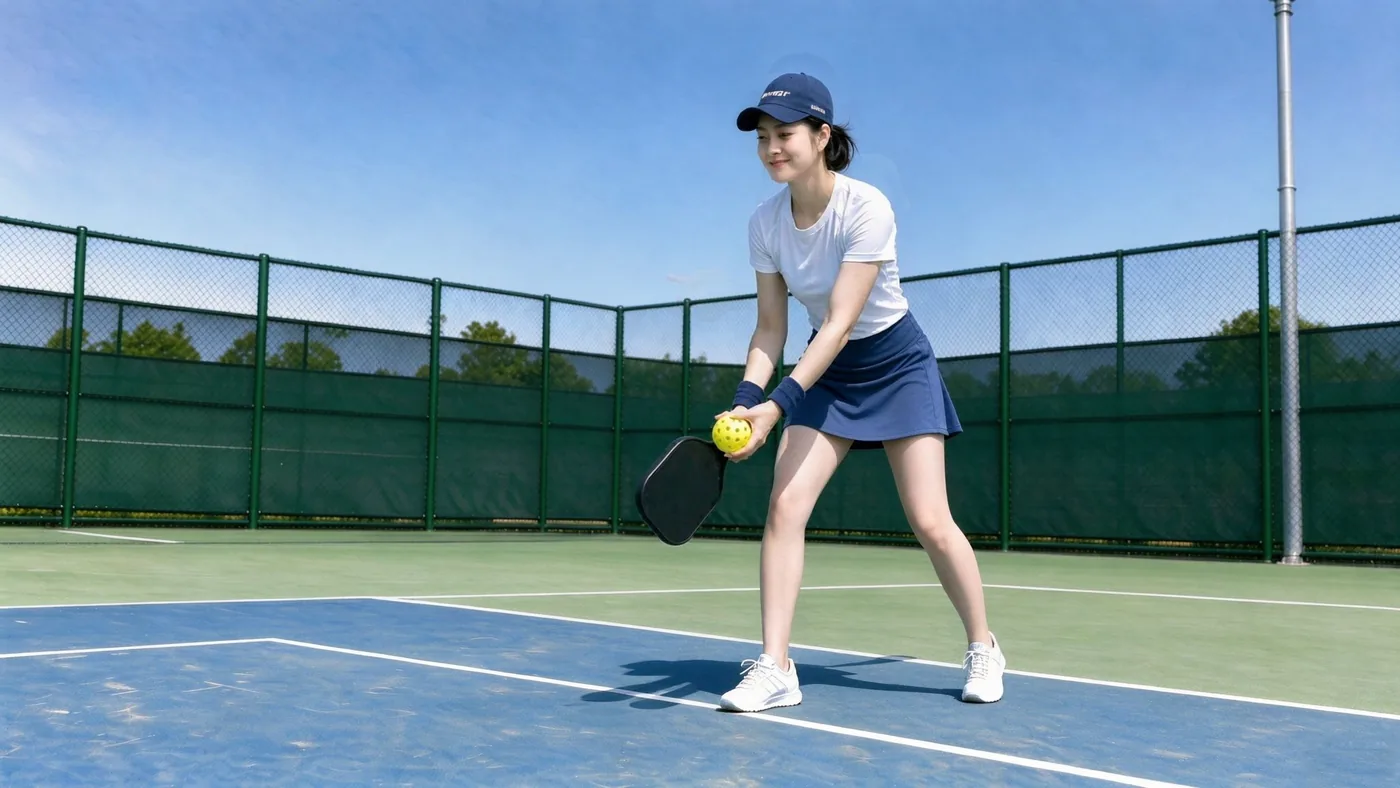
The Serve: Underhand and Diagonal
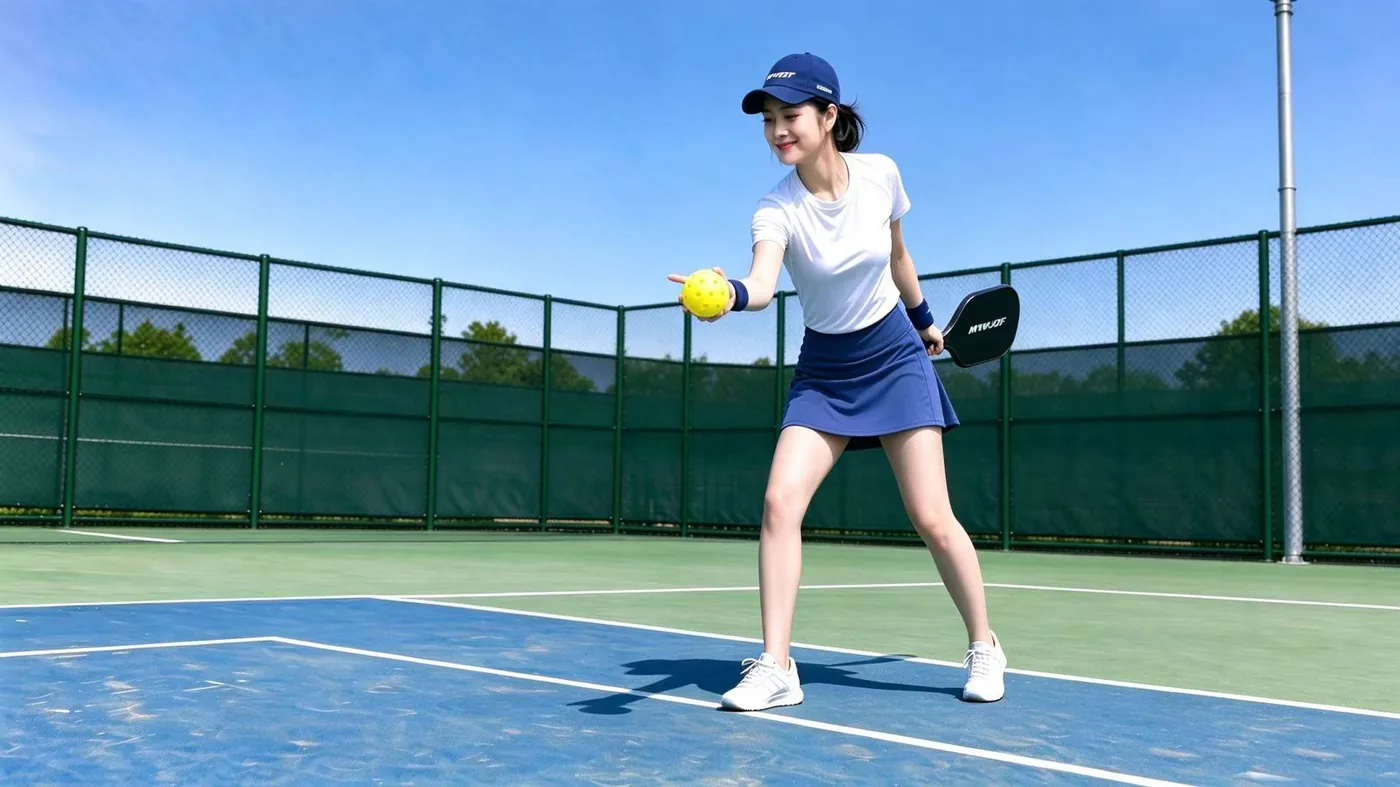
Every rally starts with an underhand serve made behind the baseline, with the paddle contacting the ball below the waist. The serve must travel diagonally into the opposite service court. You get one attempt only — there is no second serve in pickleball, which keeps games moving quickly.
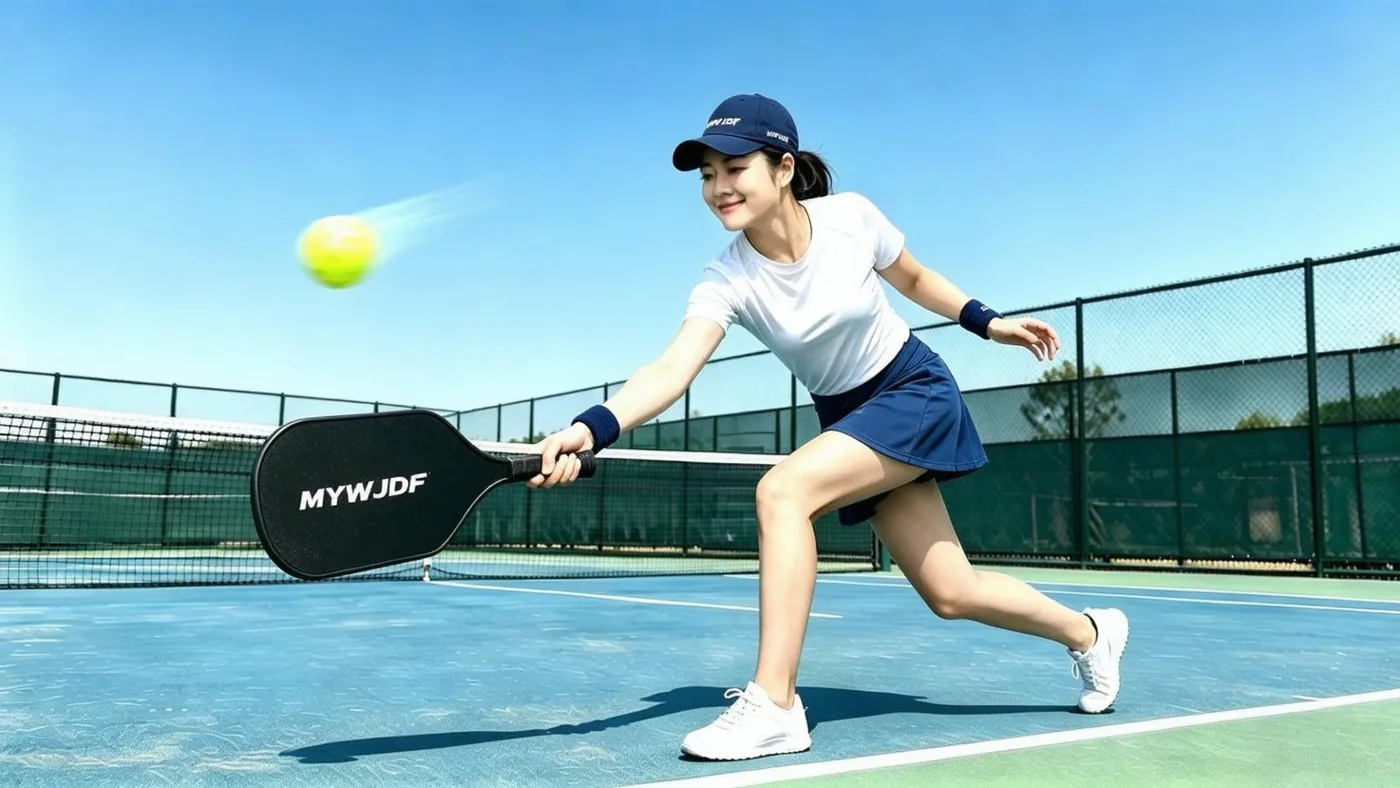
The Double-Bounce Rule
After the serve, the receiving side must let the ball bounce once before returning it, and the serving side must also let that return bounce before playing it. After those two bounces, players may volley the ball in the air or play it off the bounce. This rule removes the serve-and-rush advantage and makes rallies longer and far more beginner-friendly.
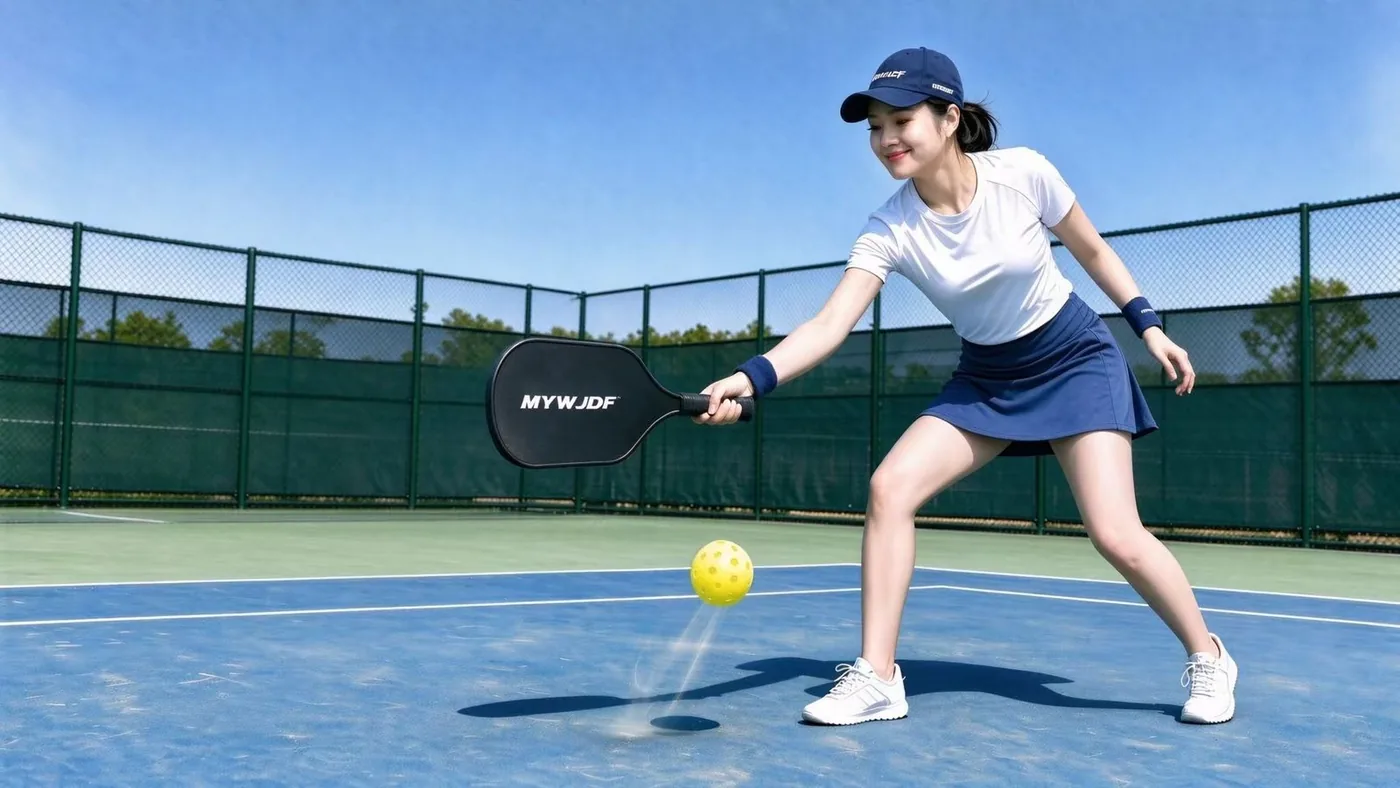
Stay Out of the Kitchen While Volleying
Players may step into the kitchen to play a ball that has bounced, but they may never hit a volley while standing inside it. If your momentum carries you into the kitchen after a volley, the point is lost. This single rule keeps overhead smashing from dominating, and it is why pickleball rallies stay genuinely competitive between beginners and experienced players.
Scoring: Only the Serving Side Scores
Games are normally played to 11 points and you must win by 2. Only the serving side can score a point; if the receiving side wins a rally, they take over the serve instead. In doubles, both partners get a serve before the paddle passes to the other team, and sides switch after each game. Simple — but enough to keep competitive games honest.
Building a pickleball program? We supply everything on this page.
From beginner paddles and training balls to regulation nets and club apparel, MYWJDF ships complete pickleball setups for retailers, clubs and schools. Tell us your market and quantities — we reply with pricing, MOQ and lead time.